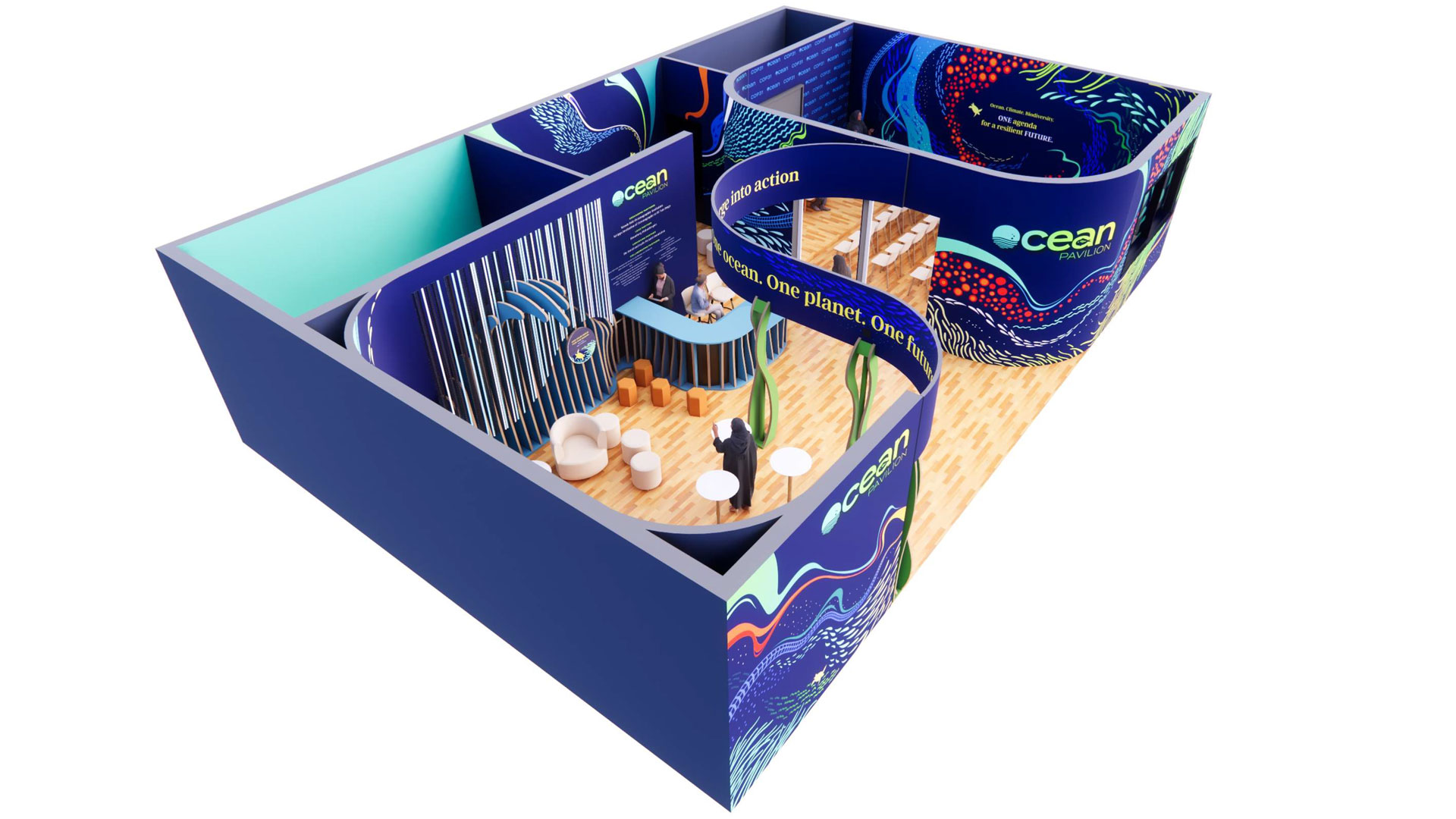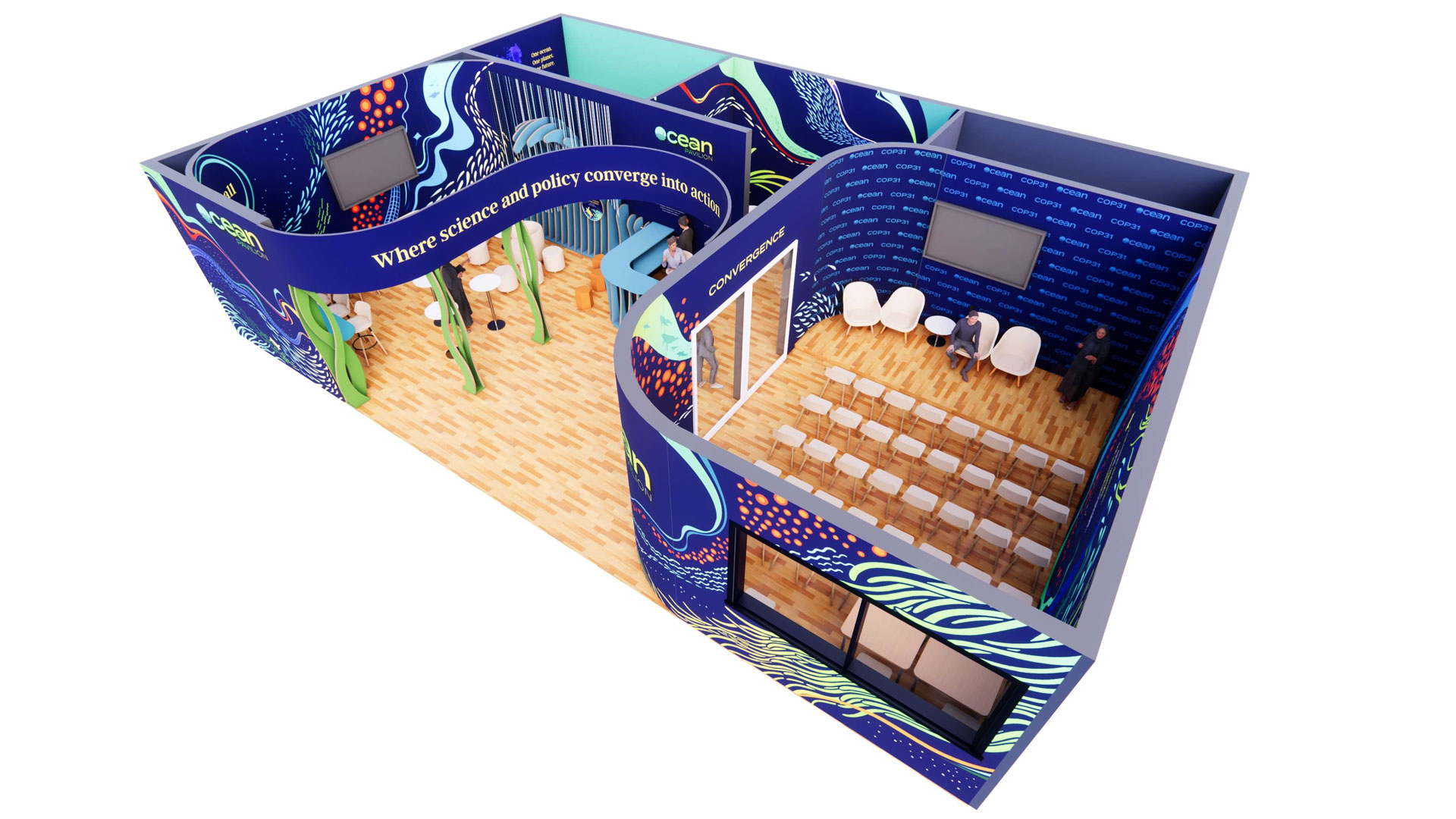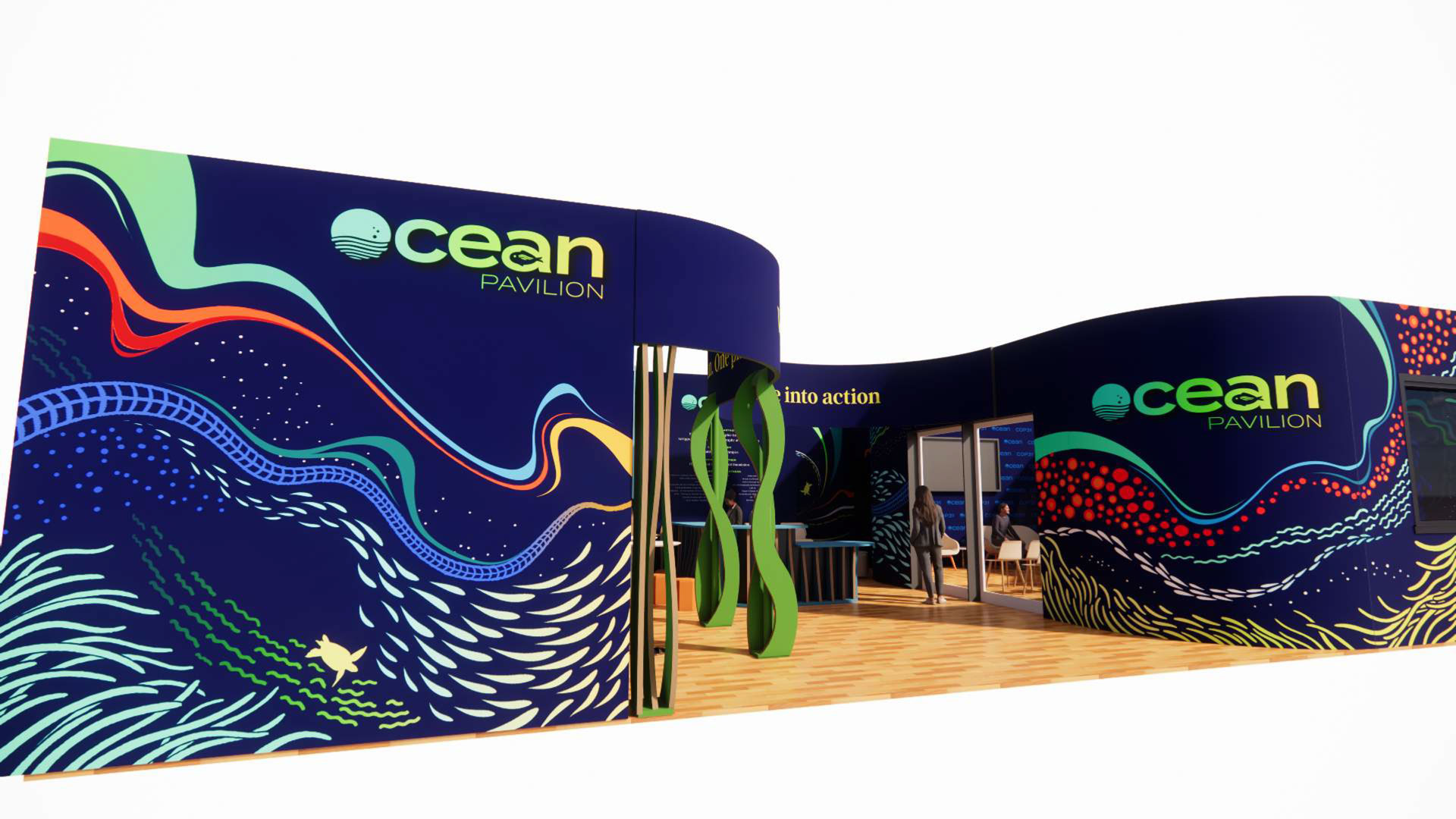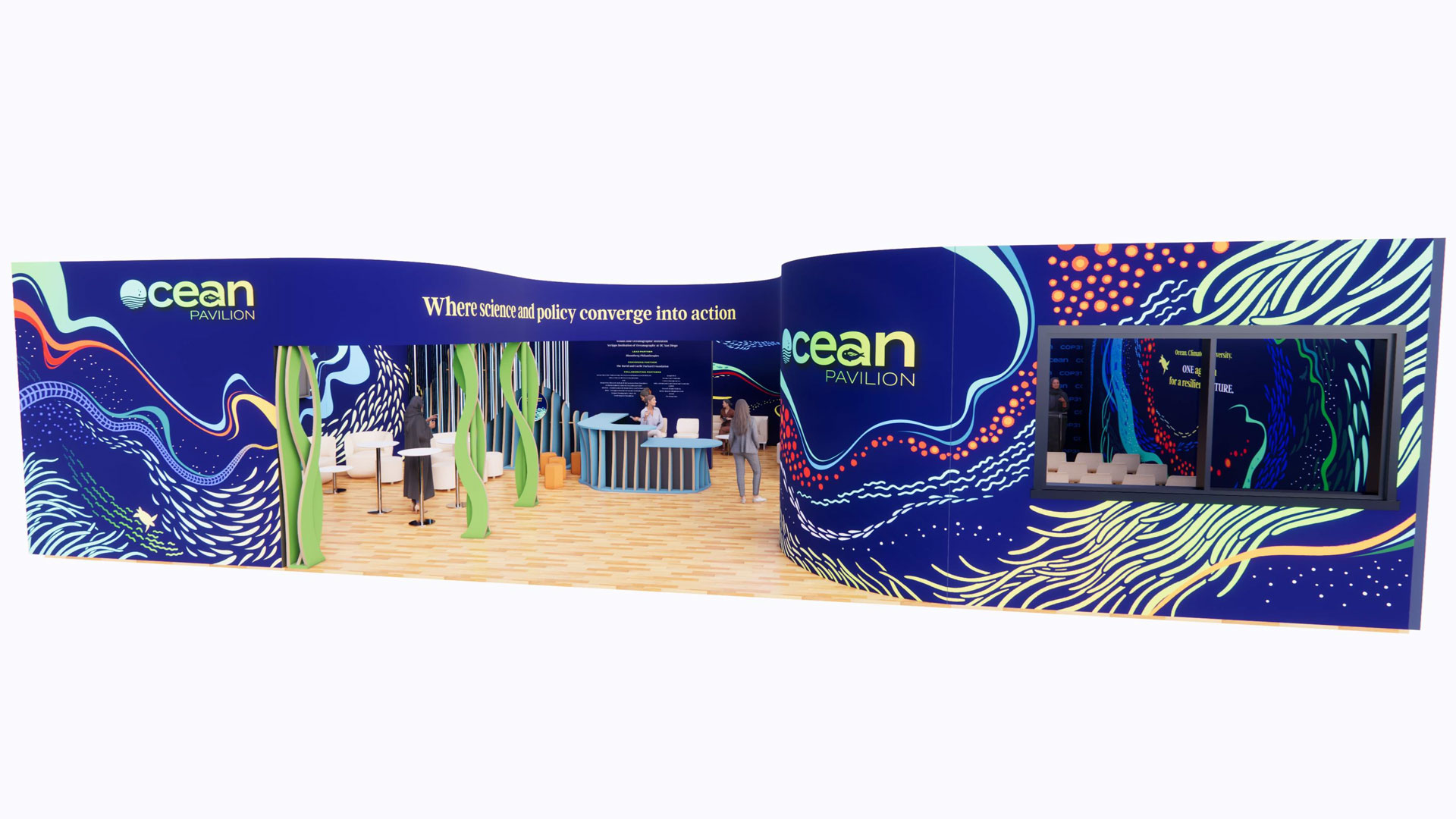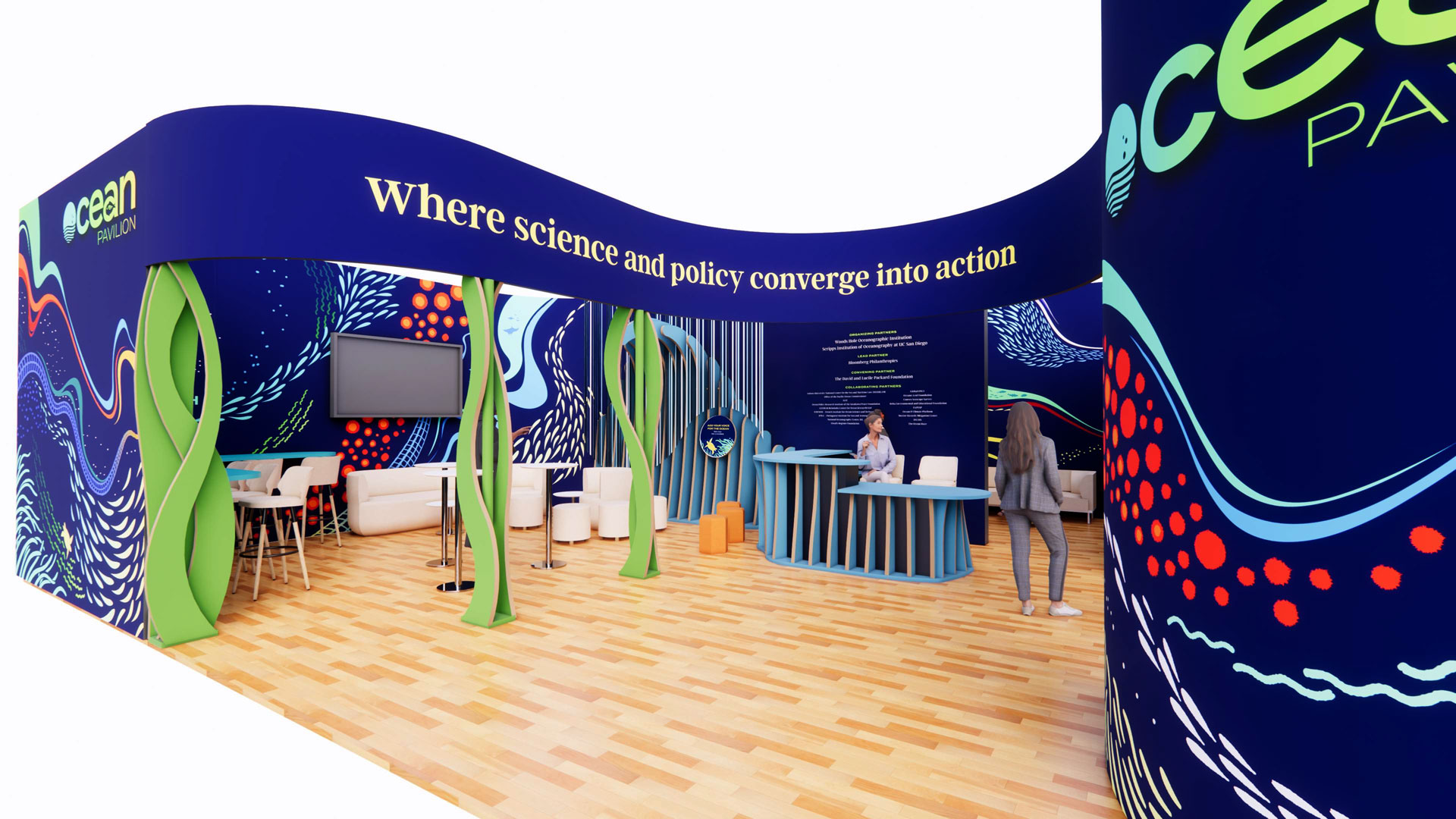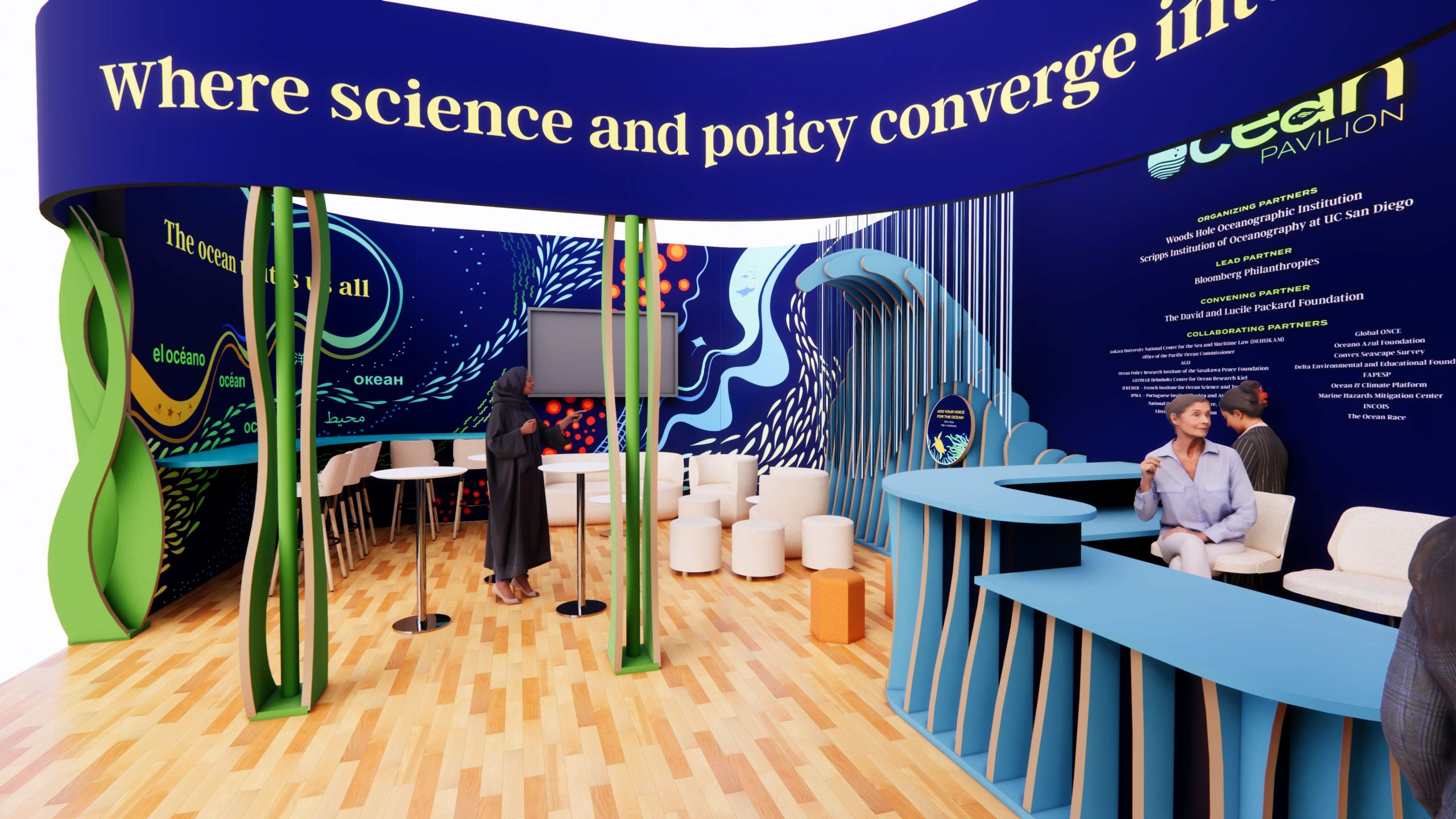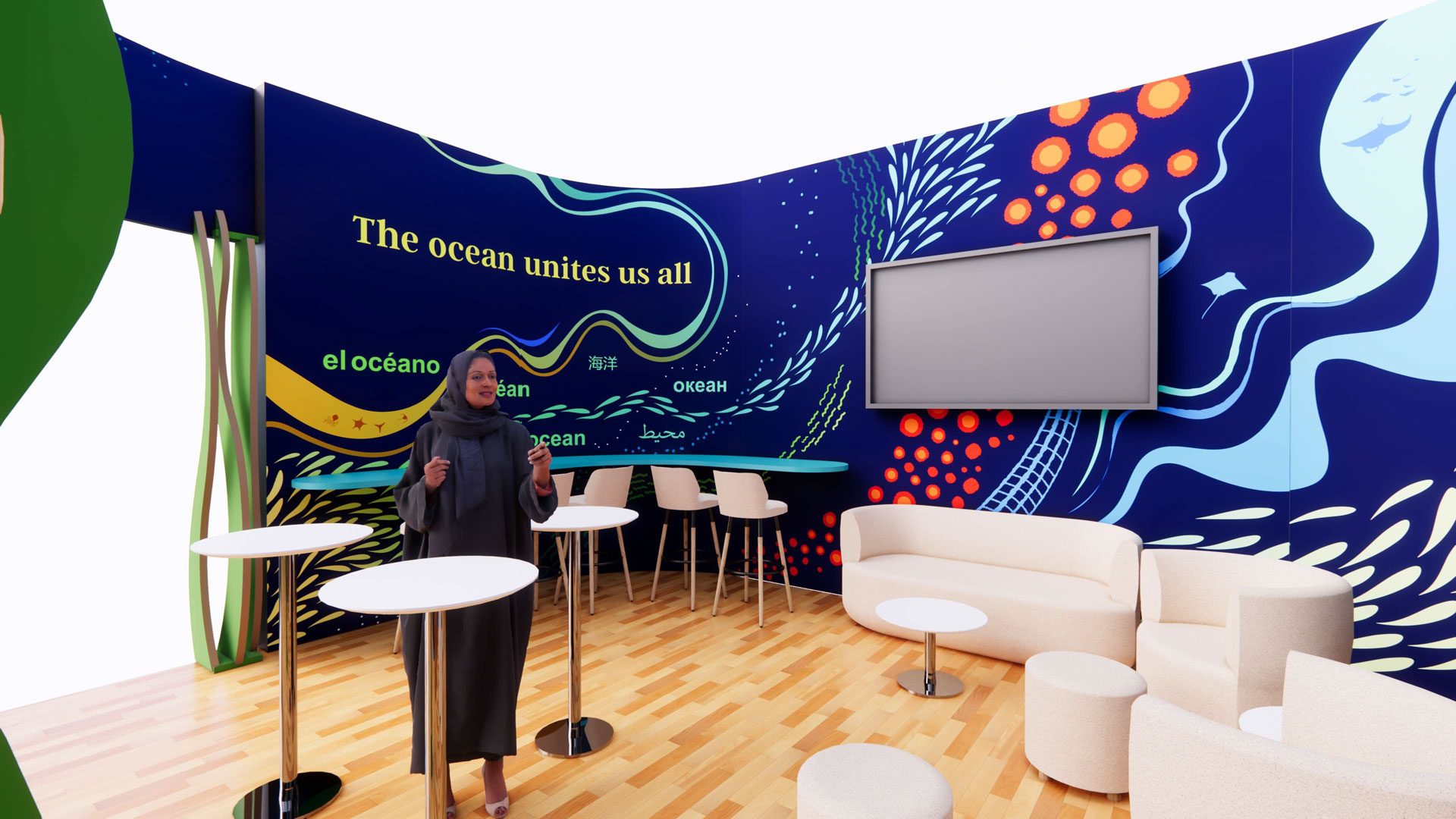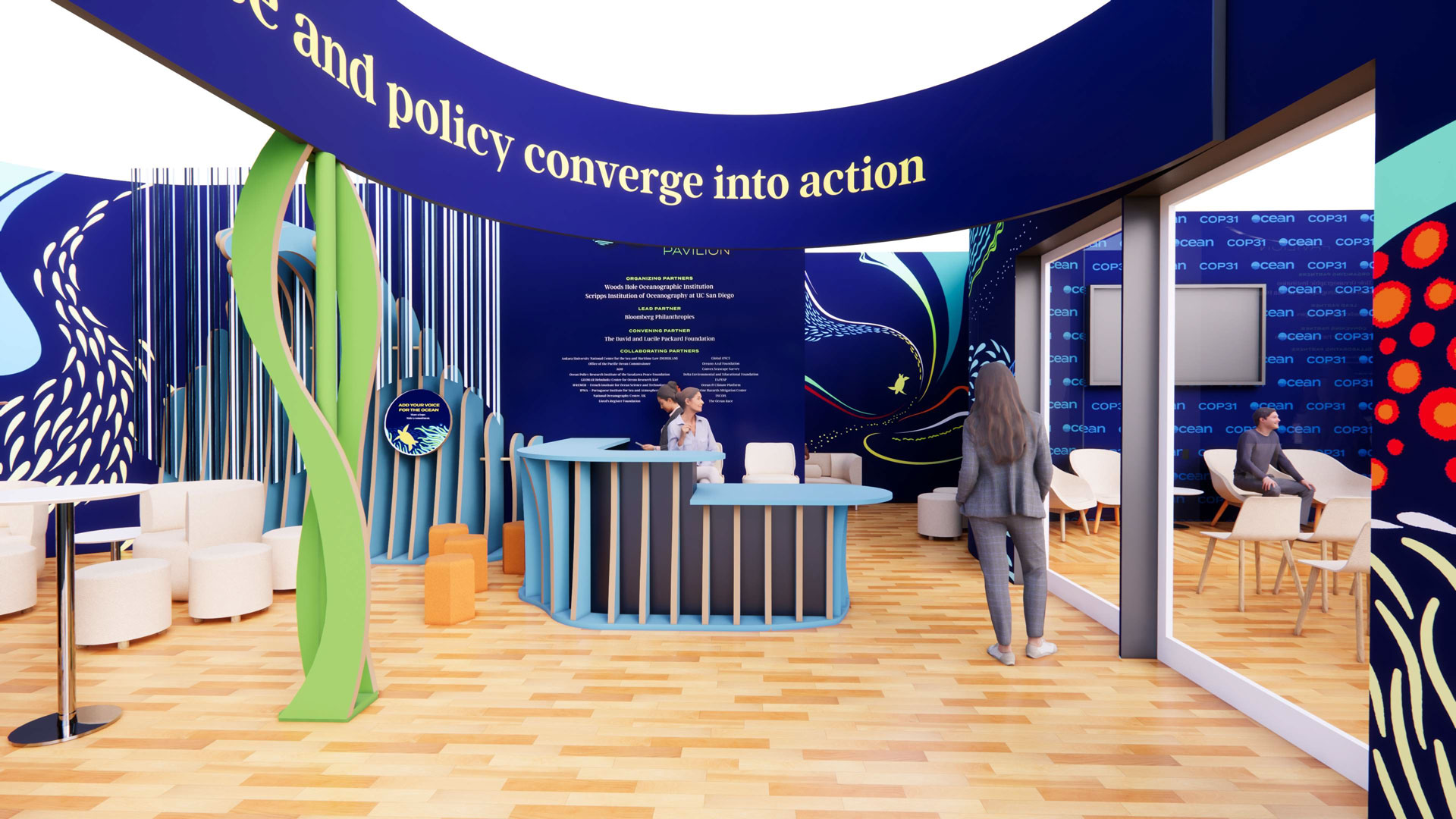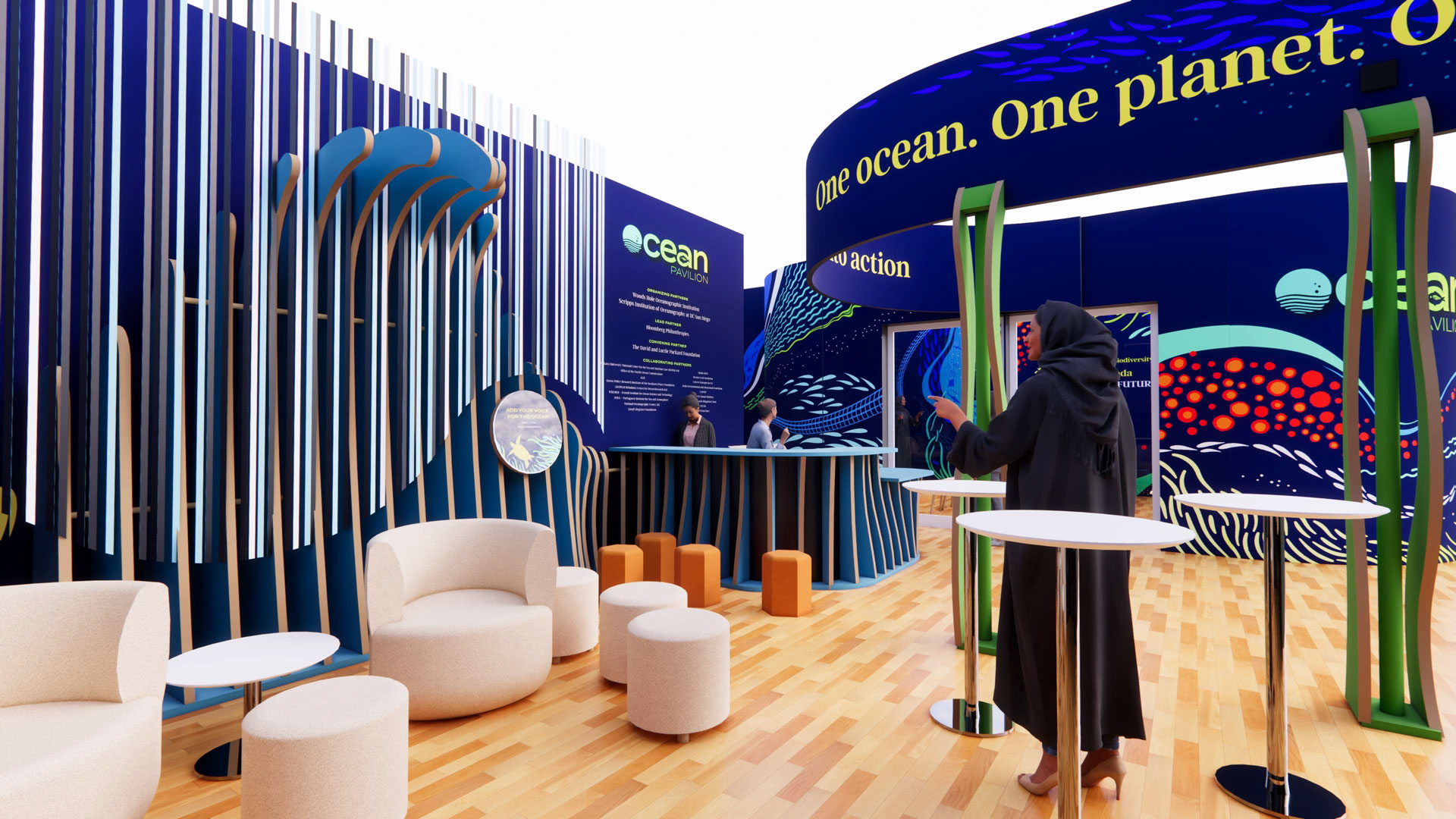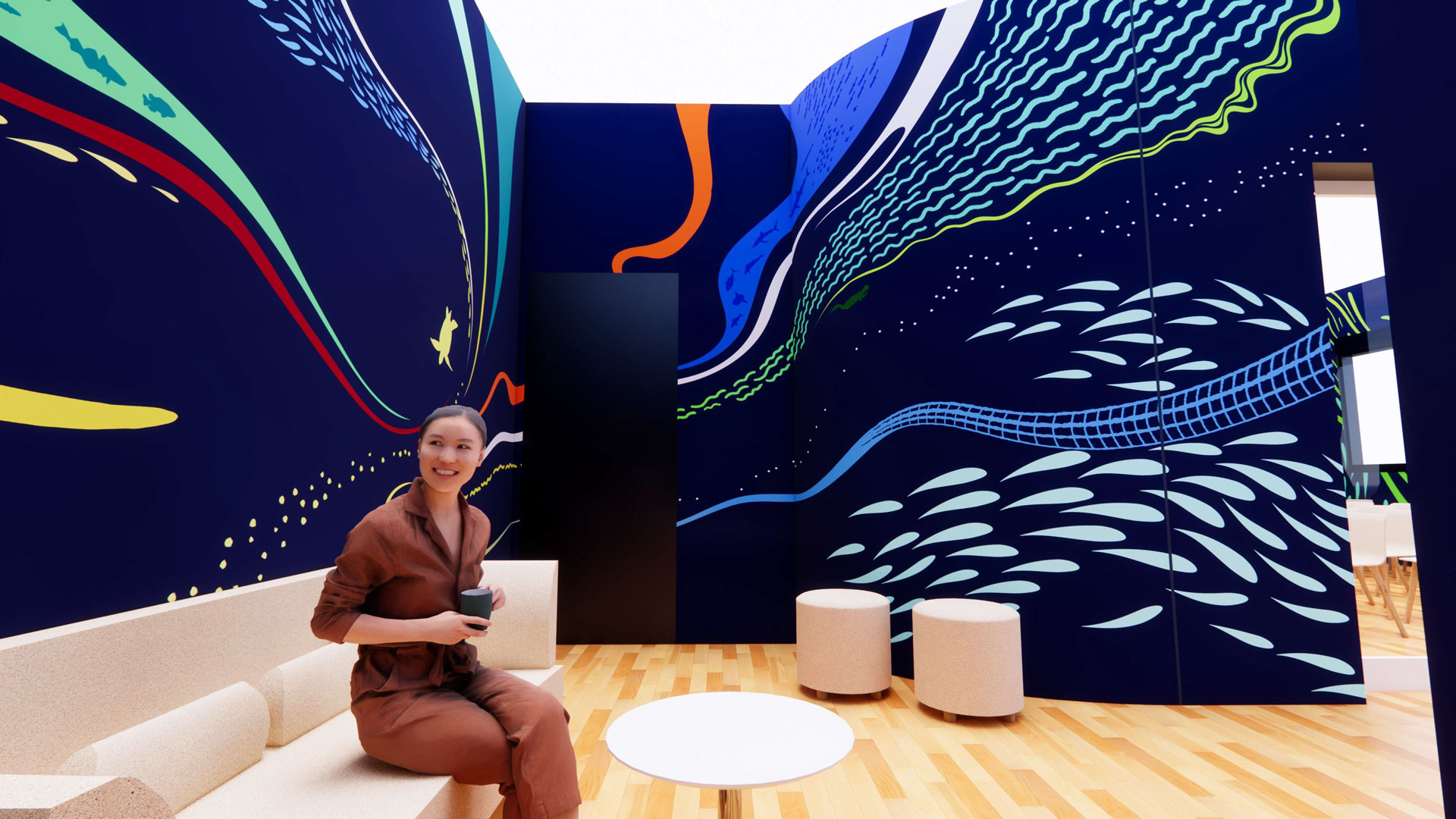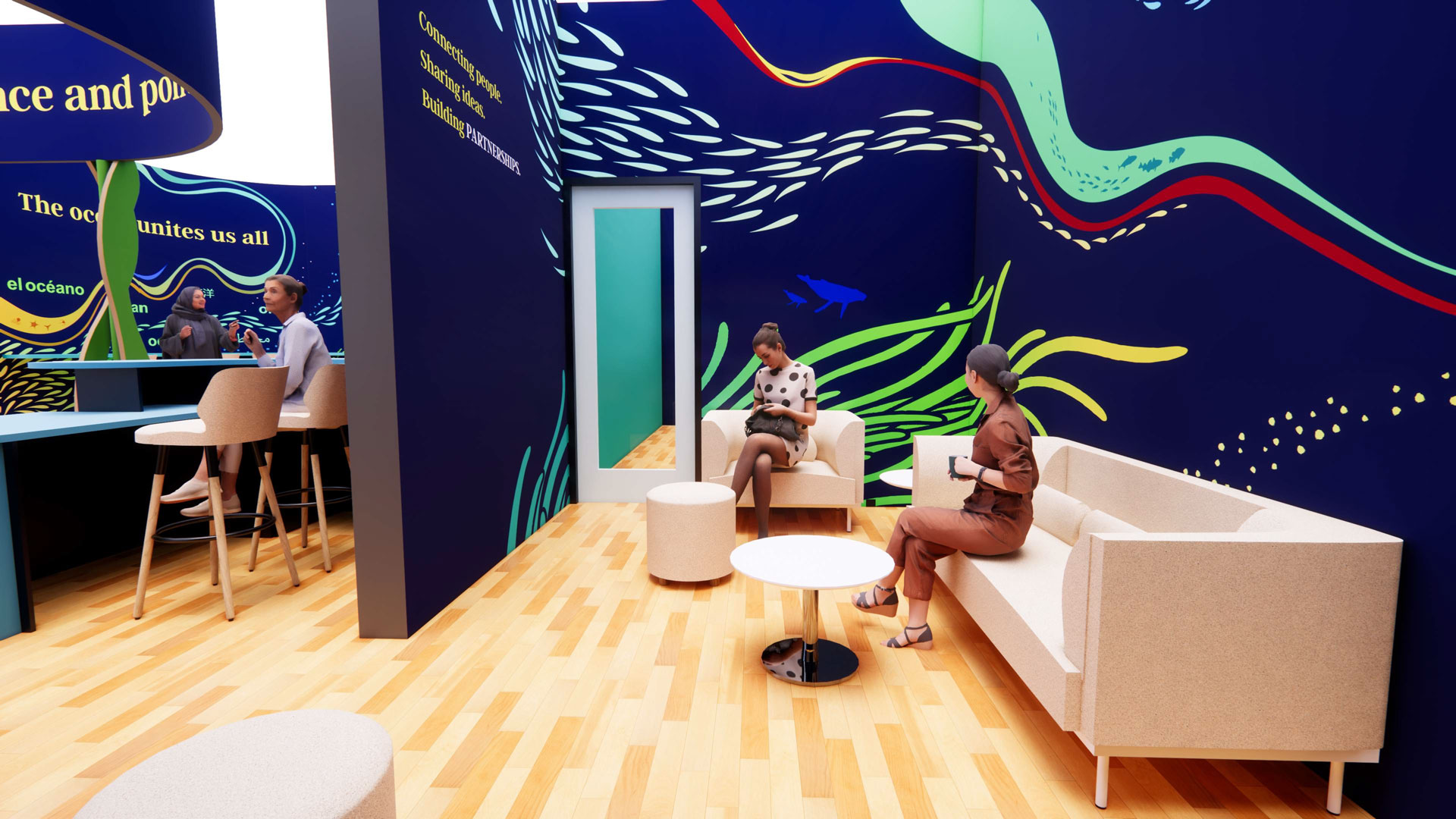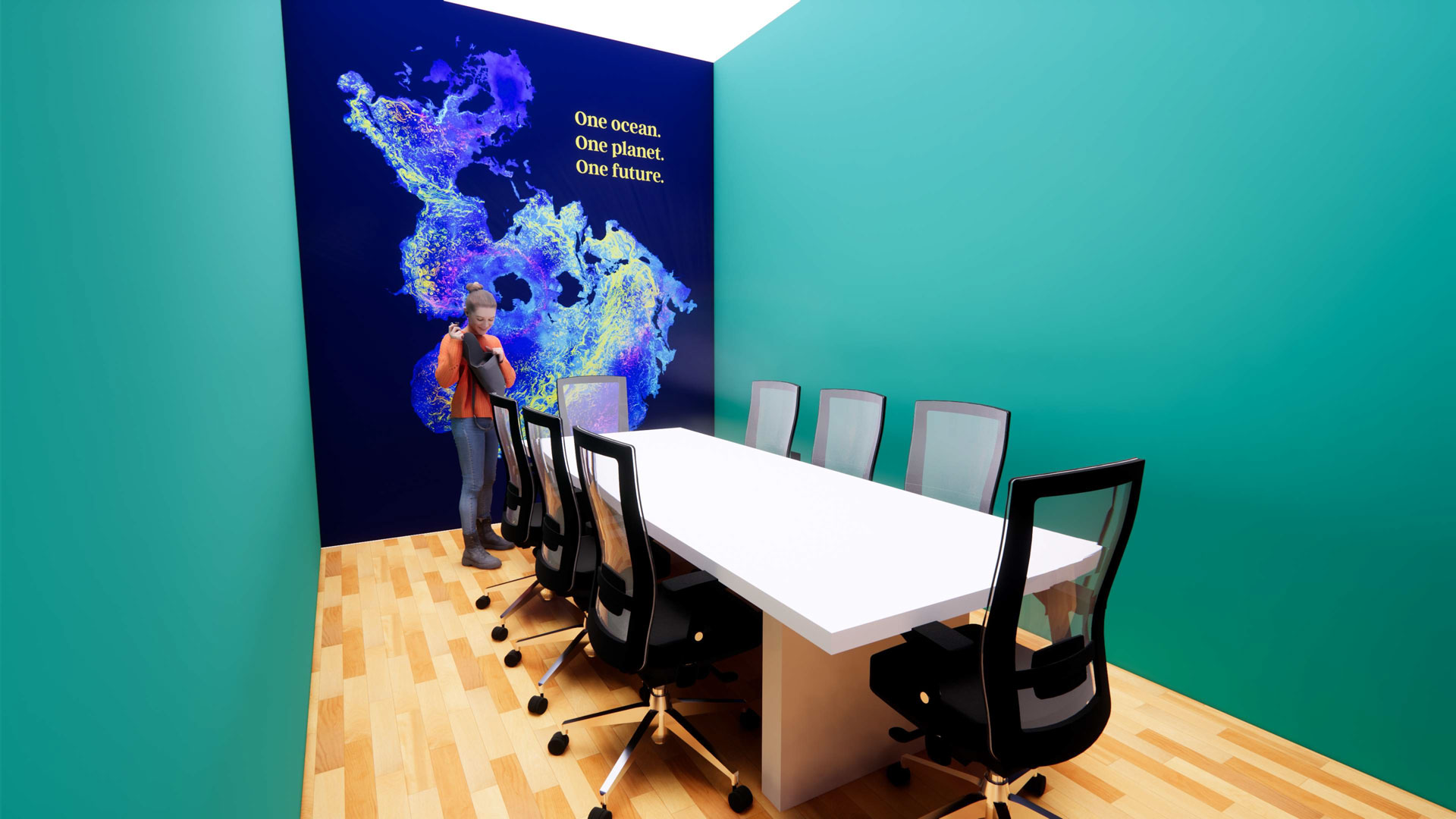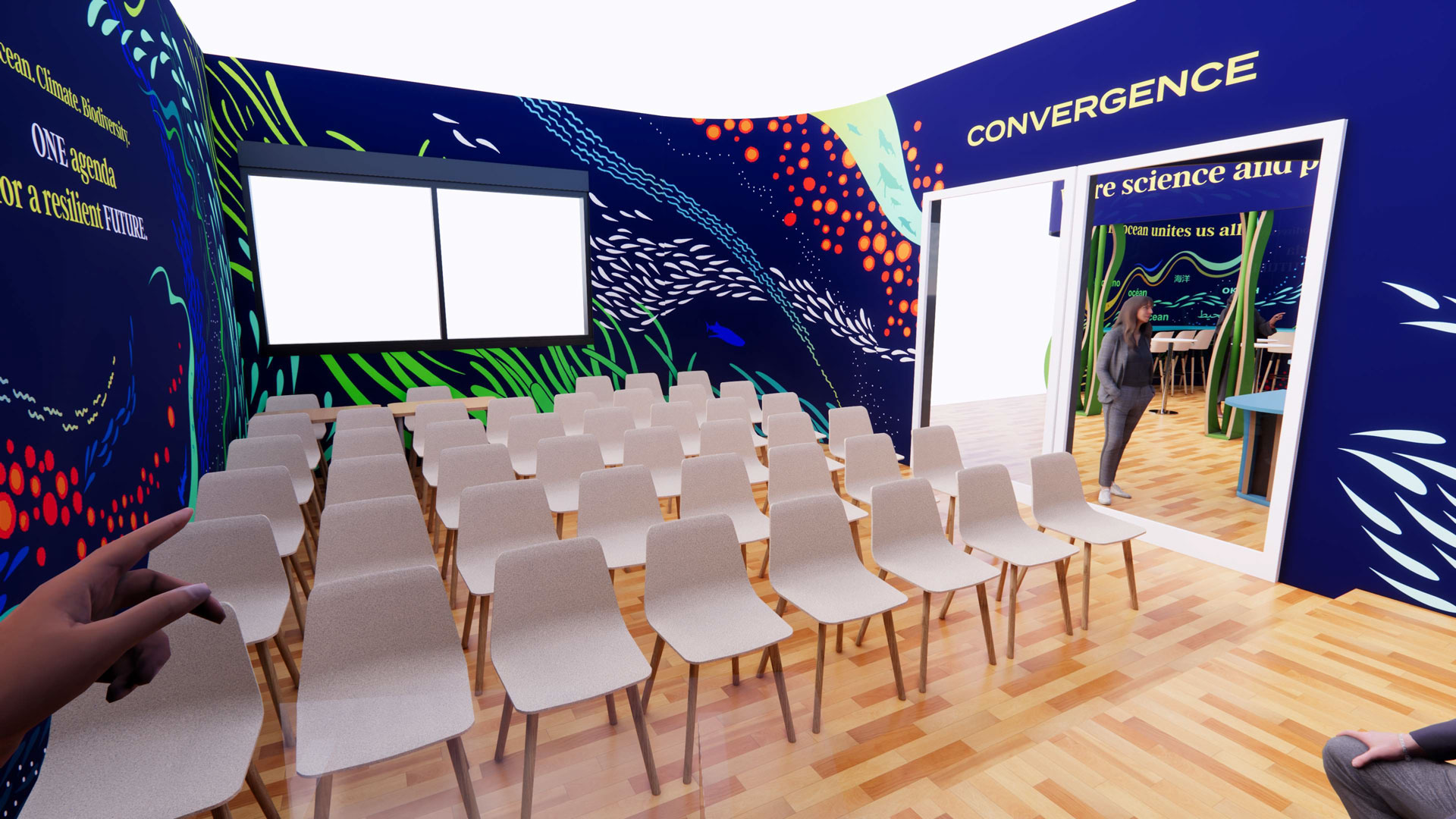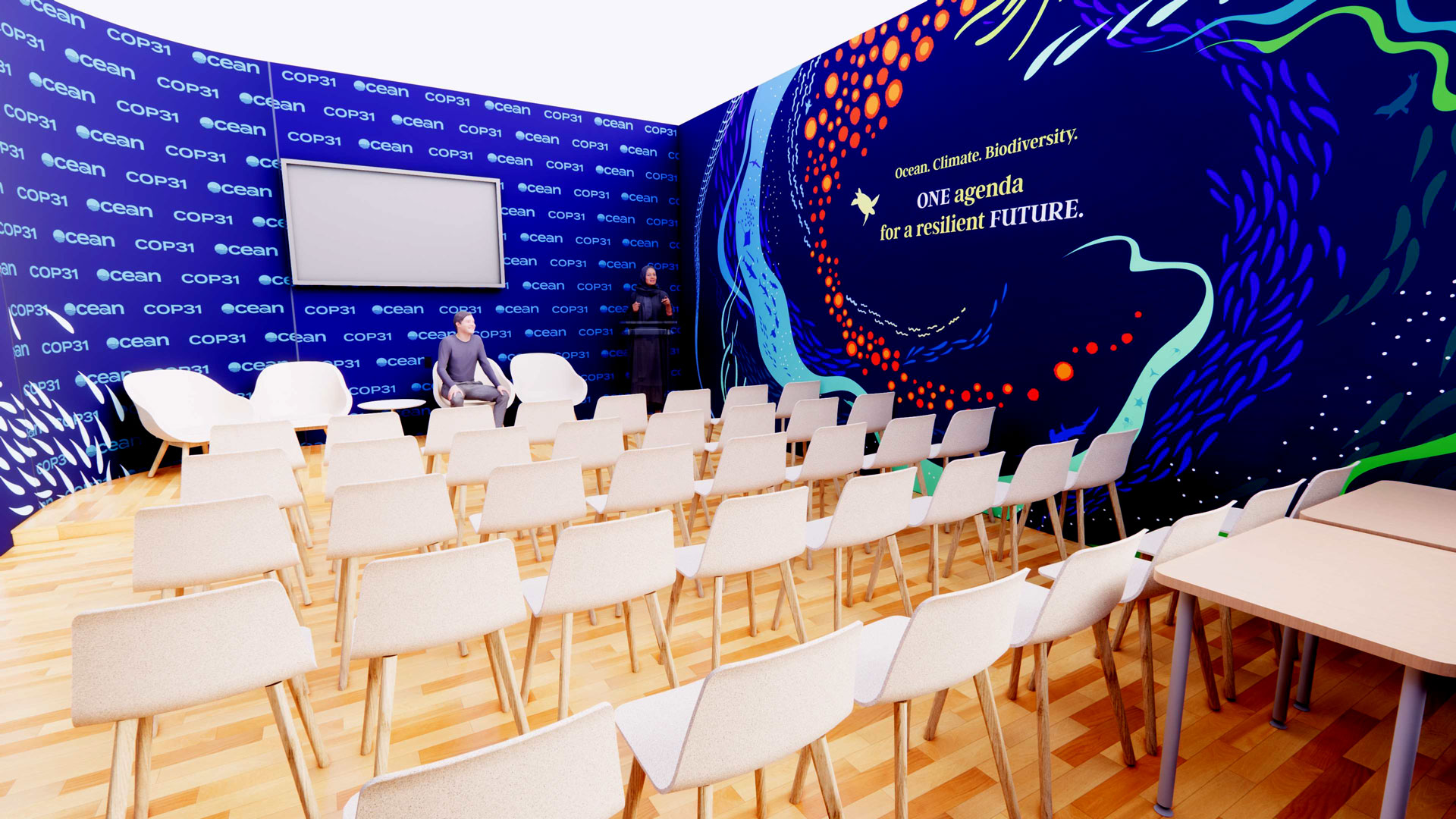

At COP31, visitors to the Ocean Pavilion will encounter artwork alive with movement and meaning: forms swirl, radiate, overlap, and ultimately draw the eye to a point of focus. Charin Park, a member of the Creative Team at the Woods Hole Oceanographic Institution (WHOI), illustrated the pavilion and developed a visual language that reflects the pavilion’s central theme at COP31: Convergence.
The Ocean Pavilion is a gathering place—one where people arrive with different experiences, priorities, and hopes for the future of the ocean.
For Charin, as well as pavilion designers Katherine Joyce and Natalie Renier at WHOI and Chris Toombs at UC San Diego’s Scripps Institution of Oceanography, convergence helped guide their vision of the Ocean Pavilion as a gathering place—one where people arrive with different experiences, priorities, and hopes for the future of the ocean. It also reflects the ocean itself: a vast, interconnected system shaped by currents, eddies, coastlines, climate, and life—both marine and human. The artwork imagines these forces moving both inward and outward, toward a point of collaboration in Antalya, and then outward again, carrying ideas and commitments into the world.
“It encapsulates so much,” Charin said of the theme. “Science, politics, history, economics. It was a little intimidating at first, but then I realized it represents so much that is beautiful about COP.”
Antalya sits at a historic crossroads of trade routes—pathways shaped by the ocean and the seafaring people that navigated them, while also carrying ideas, knowledge, and cultural exchange among distant societies. For Charin, that history made convergence especially resonant. At COP31, the city continues to connect people and perspectives as participants come together to address the ocean’s future.

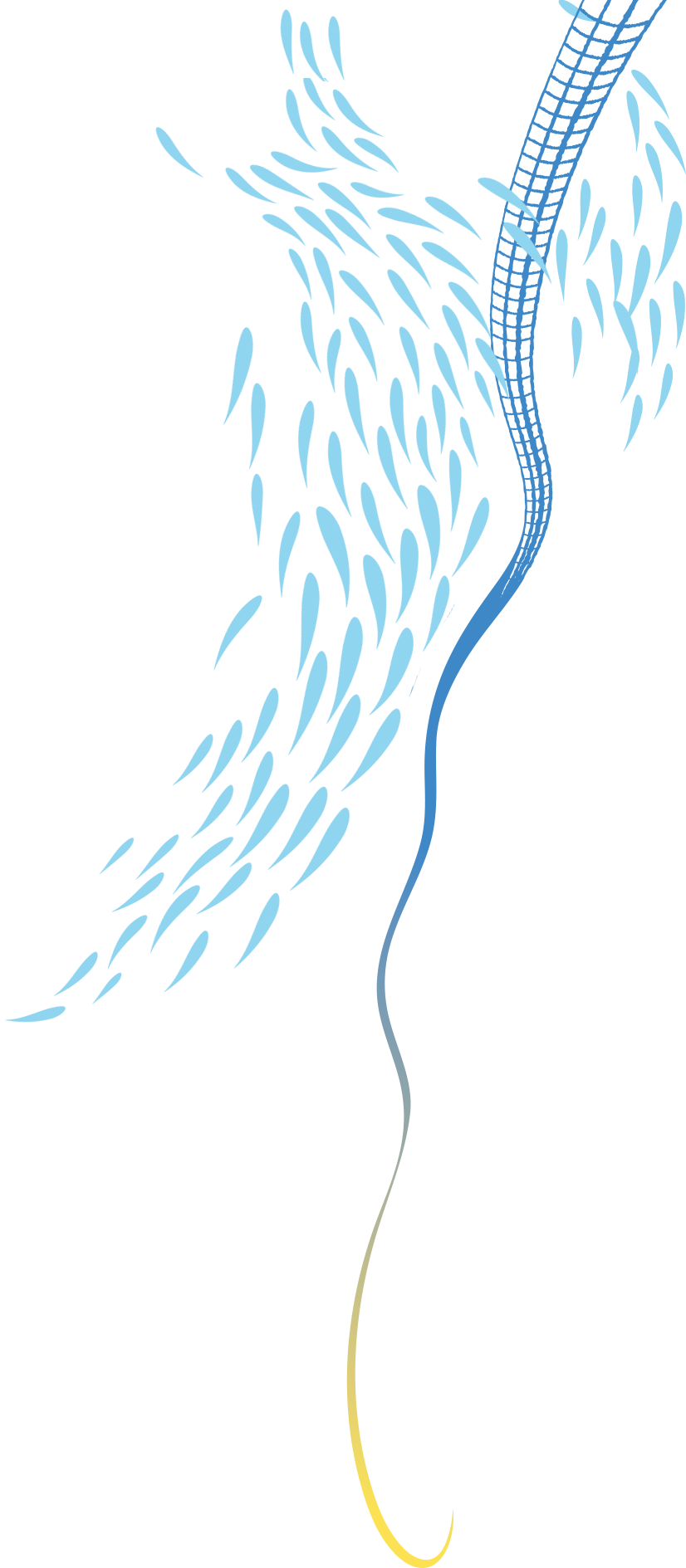
The composition incorporates abstract elements inspired by the four core focus areas of the COP31 Action Agenda item “Oceans and Seas.” Seagrass evokes blue carbon and coastal habitats. Schools of fish represent marine life and the resilience of coastal ecosystems. A gridded pattern suggests data and the ocean observing systems that humanity increasingly relies on. Concentric red dots bring to mind heat and the need to support coastal communities in the face of a warming and changing ocean.
These symbols are intentionally open to interpretation. Rather than prescribing a single meaning, Charin wanted the forms to celebrate the many actions people will take and the different values they bring to the conference. Their ambiguity invites visitors to look closely, make connections, and find their own entry point into the conversation.
The recognizable forms of fish and Caretta, the COP31 mascot, help guide that experience, directing and punctuating the eye’s movement through the pavilion and ultimately outward, suggesting what will emerge from Antalya as negotiations, partnerships, and new commitments take concrete form.
The warm palette is a departure from previous years, connecting the artwork to warming oceans and El Niño while creating sharper contrasts between neighboring colors. Blue meets white with particular intensity, emphasizing how seemingly disparate elements can meet and become part of a larger whole.
At COP31 in Antalya, the Ocean Pavilion turns the artwork’s swirling, converging patterns of color and meaning into a shared space for conversation. Its design reflects the ocean’s diversity and interconnectedness and the many perspectives gathered to discuss its—and our—future. It invites visitors to find common ground and turn new ideas into action.
View 3D renderings of the Ocean Pavilion design