

The Ocean Pavilion Returns to Global Climate Negotiations for the Fifth Year at the “Blue” COP
United Nations COP31 event in Türkiye seeks to foster more substantial ocean-based action to address risks posed by climate change
More than a dozen of the world’s leading ocean science, philanthropic, and stakeholder organizations—led by the Woods Hole Oceanographic Institution (WHOI) and UC San Diego’s Scripps Institution of Oceanography—return to international climate negotiations to bring the ocean to the forefront of what is being called the “Blue COP,” the 31st United Nations Conference of the Parties, taking place Nov. 9–20, 2026, in Antalya, Türkiye.
As in years past, the Ocean Pavilion will serve as the voice of the ocean community and a resource for negotiators and other visitors seeking knowledge that can determine society’s most effective response to the threat of global climate change. Scientists, thought leaders, and the next generation of students actively working toward solutions for the planet’s most pressing environmental challenges will be on hand to engage with COP31 negotiators and attendees.
The pavilion’s theme of “convergence” this year reflects not only the gathering of countries in common purpose, but also the rare convergence of four major global negotiations taking place within months of each other, as well as a confluence of other high-level events that serve to elevate the ocean on the global stage. All have the purpose of understanding and protecting Earth at a time when people worldwide are bracing for the ocean-atmosphere phenomenon known as El Niño, which is predicted to be one of the largest on record and is expected to disrupt weather around the globe.
Talks moderated by the UNFCCC, the Kunming-Montreal Global Biodiversity Framework, the BBNJ High Seas Agreement, and the 2030 Agenda for Sustainable Development have taken or will take place between October 2026 and early 2027.
Ocean issues were largely absent from COP negotiations until the Paris Agreement in 2015 mentioned the ocean by name in its preamble at the close of COP21. Since then, the profile of marine issues has risen in the action pledges known as Nationally Determined Contributions (NDCs) made by member nations or “parties” to the COP.
The primacy of the ocean at COP31 is reflected in the actions of this year’s COP presidency, the government of Türkiye. In June, COP President Murat Kurum together with UN Special Envoy on Climate Ambition and Solutions and founder of Bloomberg L.P. and Bloomberg Philanthropies Michael R. Bloomberg referred directly to the Ocean Pavilion in jointly announcing a partnership formed to support COP31’s Action Agenda. In their announcement, the two pledged to “elevate the Ocean Pavilion as a platform for science-based ocean-climate solutions, helping make COP31 a milestone for integrating ocean priorities into climate implementation.”
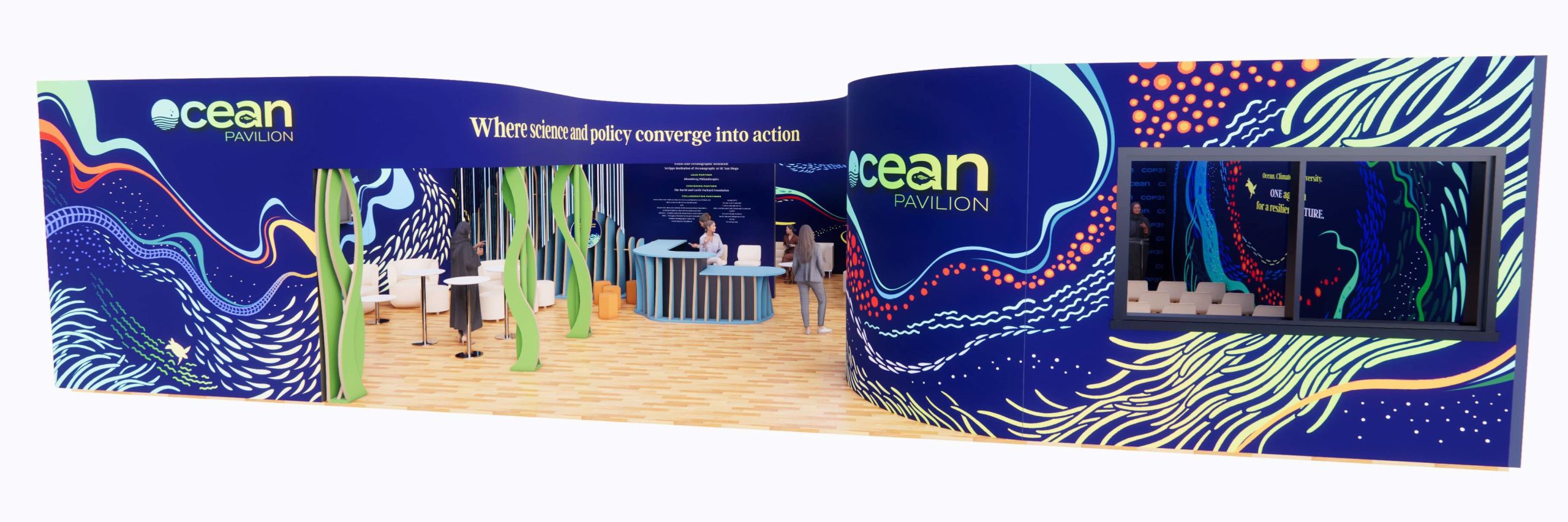
Echoing the call of the COP Presidency, the Ocean Pavilion also calls on countries to move on from mere mentions of the ocean in their action pledges to identification and encouragement of concrete actions to reverse climate impacts on the ocean, preserve marine biodiversity, and make just, responsible use of the ocean to stem and reverse the course of climate change. The pavilion’s statement of purpose, the Antalya Ocean Declaration, calls for an international compact that ensures that science informs policy, that policy mobilizes finance, and that finance accelerates implementation in pursuit of a healthy ocean, a stable climate, and a resilient future for the planet’s biodiversity. The declaration lauds the global leadership of Small Island Developing States (SIDS) in modeling effective ocean management strategies toward the global goal of mitigating the effects of climate change while helping society adapt to them.
“We live on an ocean planet, and we should see the ocean for what it is: one body, one interconnected system, and our knowledge of it should be organized that way as well,” said WHOI President and Director Peter de Menocal. “For this reason, ocean science is not an optional addition to climate policy. To ensure the long-term sustainability of society, we must open our eyes to the ocean and seek to truly understand that which makes our planet vital and livable.”
“This year provides an unprecedented opportunity for countries to set meaningful ocean protection and monitoring measures into motion,” said Scripps Oceanography Director Meenakshi Wadhwa. “The ocean shields society from the most catastrophic consequences of growing climate instability, so every investment we make in it delivers exponential returns.”
The 2026 Ocean Pavilion has slated more than 65 panel talks, keynote addresses, roundtables, and multimedia art presentations in its official programming. Additionally this year, the pavilion will offer more informal opportunities to meet scientists and hear them describe their research.
The United Nations Framework Convention on Climate Change (UNFCCC) remains the world’s highest decision-making body on climate. Each year, COP brings together heads of state, negotiators, scientists, and leaders across sectors—from industry and finance to civil society—to strengthen global action toward the goals of the Paris Agreement, which commits countries to limiting global warming to 1.5–2°C above pre-industrial levels.
Participating partners in the COP31 Ocean Pavilion include: Woods Hole Oceanographic Institution (WHOI), Scripps Institution of Oceanography at UC San Diego, Bloomberg Philanthropies, The David and Lucile Packard Foundation, Ankara University National Center for the Sea and Maritime Law (DEHUKAM), Office of the Pacific Ocean Commissioner, Ocean Policy Research Institute of the Sasakawa Peace Foundation, AGU, GEOMAR Helmholtz Centre for Ocean Research Kiel, IFREMER – French Institute for Ocean Science and Technology, Portuguese Institute for Sea and Atmosphere (IPMA), National Oceanography Centre, UK, Lloyd’s Register Foundation, Global ONCE, Oceano Azul Foundation, Convex Seascape Survey, Delta Environmental and Educational Foundation, FAPESP, Ocean & Climate Platform, Marine Hazards Mitigation Center, INCOIS, and The Ocean Race.
More information about the Ocean Pavilion and COP31 can be found on the Ocean Pavilion website, where visitors can also sign up for updates on programming and events.